For apartment hunters
You get one tour, a smiling agent, and a number you cannot check.
The price on that listing was set by someone with every reason to aim high, and nobody in the process is on your side. Inktrue puts a real number next to the asking rent before you sign a year of your life to it.
The deck is stacked, quietly.
The ask is a starting position.
A listing price is a negotiating stance, not an appraisal. Nothing in the process requires it to match what similar units on the same street actually lease for, and nothing flags it when it does not.
You are comparing from memory.
You have seen four apartments in two weeks. They have started to blur, and none of them were the same size, floor or condition. The agent across the table has seen four hundred.
The clock is the weapon.
Applications close, deposits are requested, and someone mentions that two other people saw it this morning. That pressure is exactly what stops anyone from checking the price.
So we hand you the other side of the table.
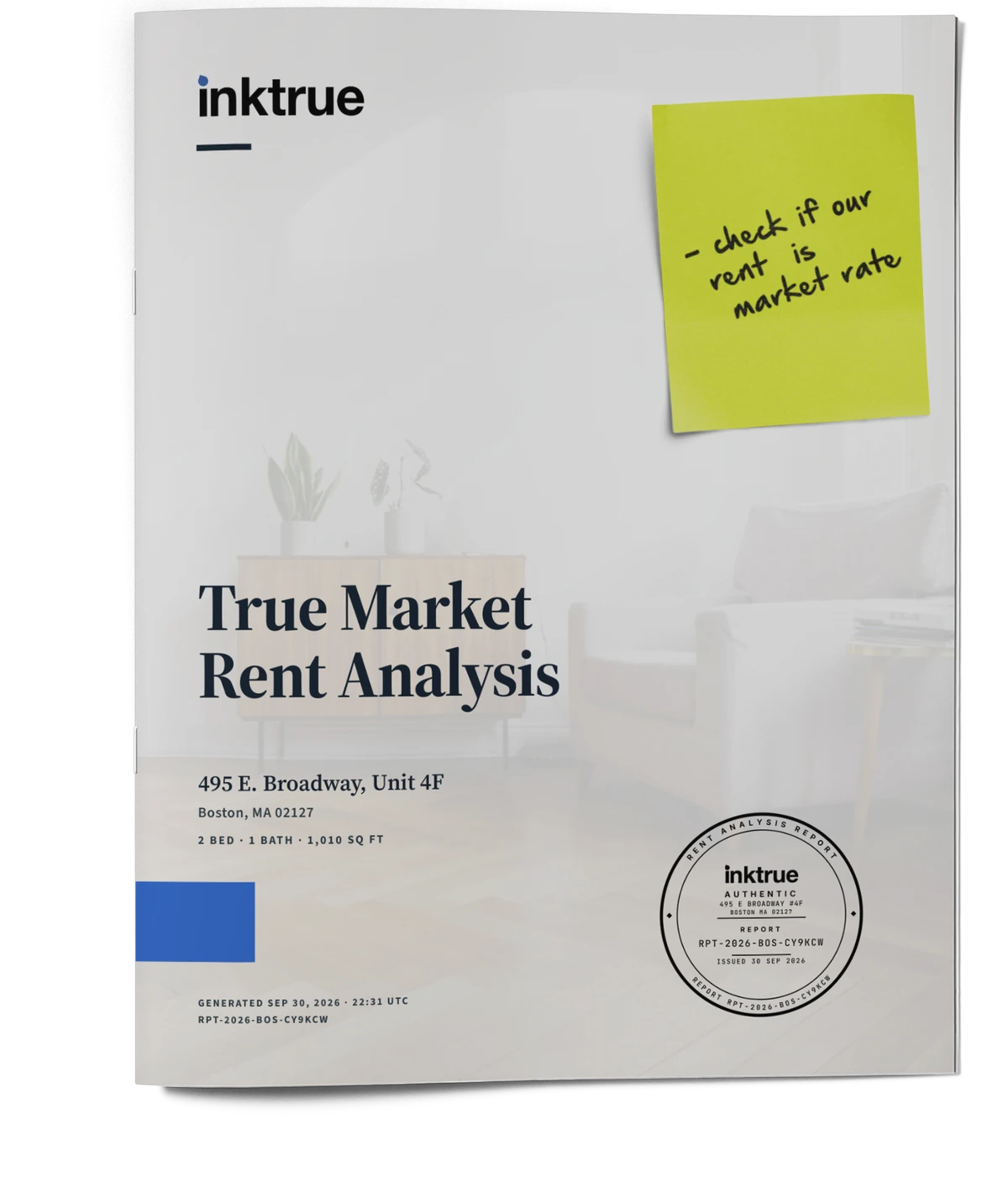
Give us the listing and the few things only you noticed on the tour. We match the unit to leases actually signed nearby, on the same beds, baths and size, then price each attribute on its own: the kitchen you liked, the window that does not open, the parking that turns out not to be included. What comes back is a document, not a number. Every comparable we used is printed in it, with the address, the rent and when it was last seen, so you can check our work the way you would check a contractor’s quote.
From the sample report. The asking rent and the estimate are shown side by side, with the range where units like this one usually settle.
What the listing tells you
- A price
- Photographs taken at the best hour of the day
- The amenities worth mentioning
- How soon you need to decide
What the report tells you
- What units like this one actually lease for
- Every comparable, with address, rent and date
- What each feature adds or subtracts, in dollars
- Whether the market is tightening or softening right now
The gap, in dollars.
If the ask runs over the estimate you learn by how much and why, down to the individual features. If it is fair, you learn that too and stop second-guessing yourself.
You stop feeling worked.
What you are really chasing is not the savings. It is the end of that nagging sense that you are being handled. You get to love the apartment without wondering what it cost you.
Run the listing before the window closes.
The report is free and the form takes a few minutes. If you would rather understand the process first, the renter guide covers how to use a report in an actual conversation.